


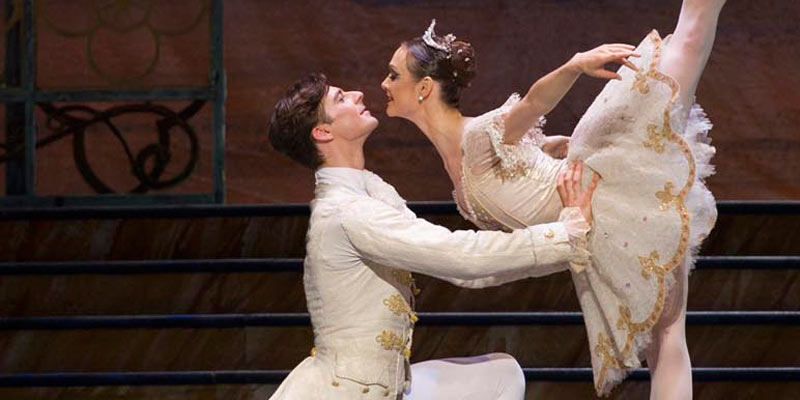
Finding myself in Rome for a few weeks, I decided to test the local waters and was happy to discover that the Rome Opera Ballet was performing Tchaikovsky’s 'Sleeping Beauty', with several casts. I chose a cast almost at random...
Author - Marina Harss

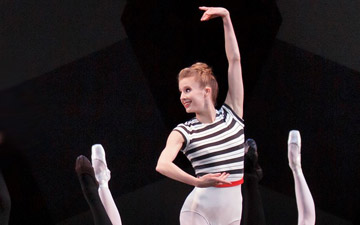
Justin Peck has gone from unknown corps-member to choreographer-of-the-moment in a blink of an eye. (He created his first piece for the company in 2012; this is his sixth.)
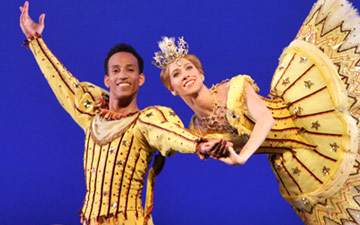
Both as a tribute to Ashton and as a coming-out party, it’s hard to imagine how the festival could have gone better. The ballets are in good hands.

In New York we are lucky to see quite a bit of Indian classical dance. The local crowd has developed a taste for it, and thus has been spoiled with some memorable performances...
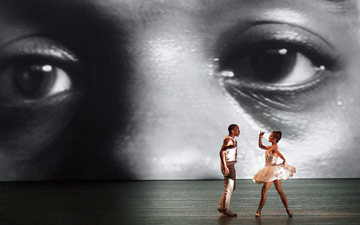
Opening night of New York City Ballet’s spring season wasn’t a gala, but there was a festive buzz in the theatre nonetheless. The ballets were all by living choreographers; the oldest dated from 1988, half were of more recent vintage.

The task Johnson faces is complicated, full of potential pit-falls. In these early seasons she is working to define the company’s character, while helping the dancers to hone their classical training and shine as individuals.
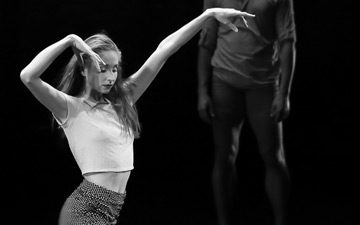
Two young NYCB choreographers have been out talking and showing what they do: Justin Peck at the Guggenheim and Troy Schumacher at the 92nd Street Y. Marina Harss on why they are so worth tracking...
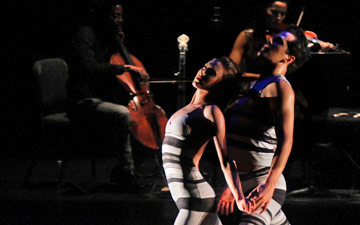
Twyla Tharp loves Americana. She’s made dances to Shaker hymns and to the crooning voice of Frank Sinatra, and whipped up steps to the super-sophisticated piano tunes of Willie “The Lion” Smith. So it’s no surprise...

Stravinsky’s is a bitter tale with folk roots, about a soldier (played by the convincingly guileless, agile Tom Pecinka) returning home from the front who is sidetracked by the devil....
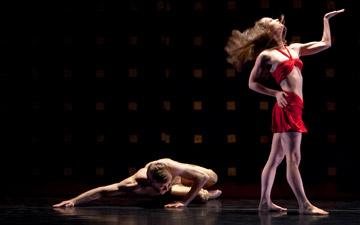
Taylor’s dancers continue to move with their particular combination of generosity and tirelessness. They come in different sizes and types, like the rest of us...
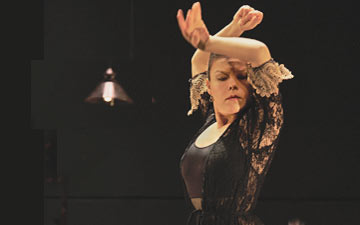
If there’s one overriding impression left by Rocío Molina’s intimate evening Afectos it’s the general eschewing of flamenco clichés. Molina does what she likes and is indebted to no-one.
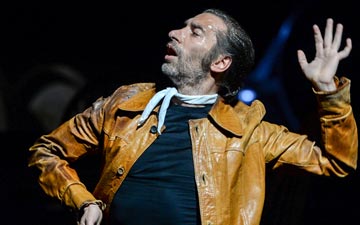
His body is like a cubist deconstruction of the human form, all angles and planes. His fingers and wrists can be as rigid as hammers or as florid as Moorish arabesques.
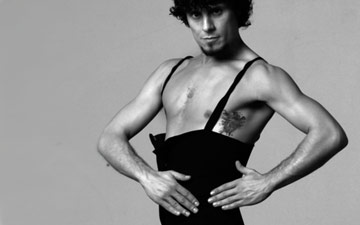
The choreographer Mark Morris has said that he decided he wanted to become a dancer when, as a kid, he saw a performance by the flamenco powerhouse José Greco.
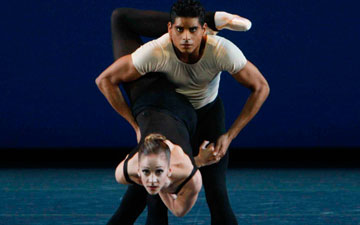
Watching these three ballets, made over a span of thirty-two years, one can see how Balanchine’s style evolved toward the hyper-stylization of Violin Concerto...
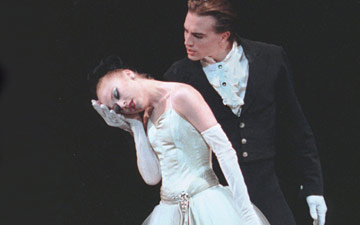
George Balanchine’s favorite composers may have been Stravinsky and Tchaikovsky, but it’s no secret that he also had an affinity for France and its music...

Some dancers leave us wanting more. That’s how Jenifer Ringer’s retirement from New York City Ballet feels; we’ve seen so little of her in recent seasons, and she’s dancing so well.

It’s nice to change one’s mind about a choreographer once in a while. I’ll come clean: for all their craft and lucidity, I’ve generally found Pam Tanowitz’s dances exceedingly dry, like meticulously-put-together exercises.
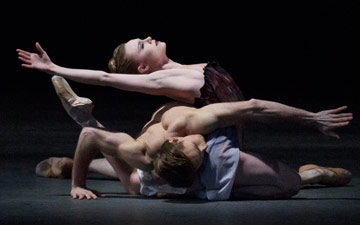
Acheron, Liam Scarlett's new piece, revealed a choreographer of prodigious imagination and compositional craft, adept at building an atmosphere and suffusing it with traces of meaning.
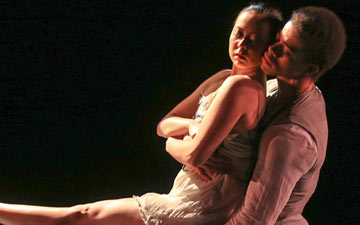
The company embraces the turn-of-the-20th-century Cecchetti Method, more concerned with anatomic integrity than with razzle-dazzle. Cecchetti’s motto is “purity of line, simplicity of style.” You get the idea.
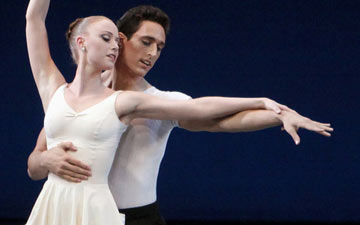
There is perhaps no better way to start off a season at New York City Ballet than with a performance of Balanchine’s Concerto Barocco.