


Pina Bausch and her designer, Peter Pabst, appear to have thrown in the Turkish towel when it came to the company’s evocation of Istanbul. Maybe they were overwhelmed by the overlay of cultures, past and present.
Reviews
Reviews of Dance and Ballet Performances
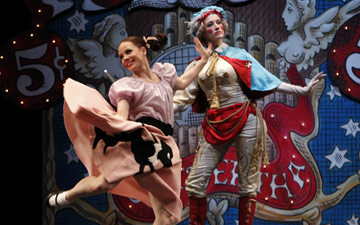
The seven works I saw over two nights started with Aureole and ended with Esplanade, and even in these less than perfect circumstances it's impossible to resist the enchantment of these two masterpieces. Aureole especially seems to me the essence of Paul Taylor...
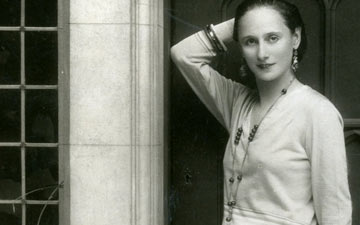
The compere of the evening was Anthony Dowell, in fine voice. He spoke the narration, enacted several of the characters and gallantly danced the ‘Fred step’ from Pavlova’s 'Gavotte' with Ursula Hageli as Anna.
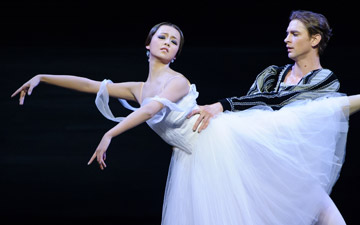
Keshyshev made a remarkable debut as Albrecht, partnering Zhang Si Yuan who was also dancing Giselle for the very first time. Both dancers were so confident, and assured, that it was hard to believe that they were actually making debuts...
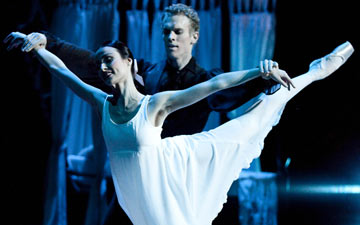
Onegin has been part of the Australian Ballet repertoire since 1976, first introduced at the behest of Anne Woolliams, who worked with Cranko at the Stuttgart Ballet. Woolliams replaced Sir Robert Helpmann as artistic director of the Australian Ballet in 1976, a move that angered Helpmann...
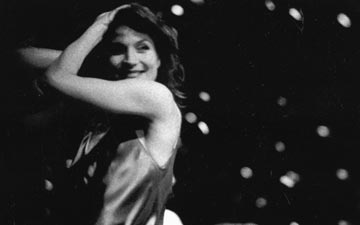
Ten Chi is like a musical composition mostly in a minor key – an accumulation of moments and motifs without a strong sense of purpose. In fact, much of the recorded music seems half-heard in sleep. There’s a pervasive feeling of melancholy, of a culture beyond comprehension except in crass tourist terms.
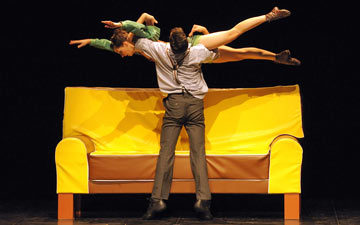
The company brought two contrasting programmes, one classical, In the Steps of Petipa, and one modern, 4 Tendances (Four Tendencies). Of the two, the dancers looked far more at home in the contemporary pieces...

Once again, the performers of Tanztheater Wuppertal Pina Bausch win over the audience with an apparently effortless ease.... Anna Wehsarg – a gorgeous statuesque redhead with legs that go on forever - can just walk on the stage, gazing into the audience and she has me captured.

Underpinning all of these familiar devices is the remarkable, intoxicating charisma of this extended family of performers, many of whom have been with the company for 30+ years. They continue to represent, with a comfortable faultless ease, Bausch’s unique cultural legacy...
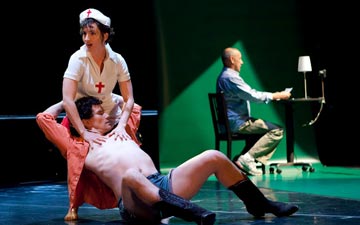
If you refrain from reading any advance publicity or the program itself before you see this piece, then you will probably enjoy yourself and laugh very hard. But if you know ahead of time what he claims are his artistic goals for the production, by the end you may be... disappointed, bewildered, incredulous, perplexed, even irritated.
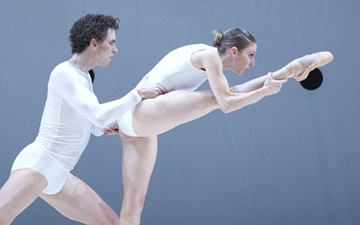
How can a company make good impression with just a few performances of one or two programs? The pieces have to be representative, interesting, and show the company in a the best possible light. It’s not easy, as the recent Lincoln Center performances of Australian Ballet have shown.
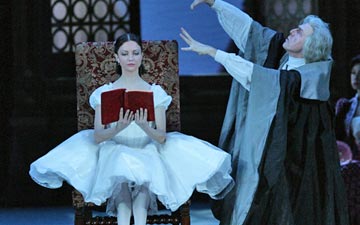
The Bolshoi's new Coppelia was heavenly fun. Vikharev’s production brought to the fore the Russian ballet tradition of expressive pantomime and spirited ensemble dances.
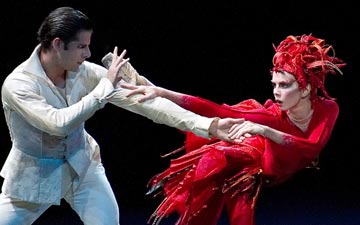
Sometimes the second time is the charm. This seems to be especially true when it comes to new ballets by Alexei Ratmansky. Often, they’re not easy to take in on first viewing, indigestible as an over-rich meal. But then, something in us changes, our eye evolves.
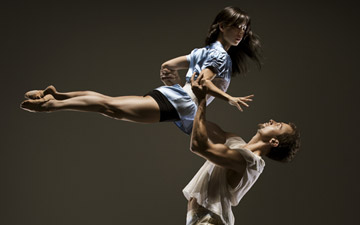
In a world where choreographers with their own eponymous companies prevail, I am happy to see that Moses sees the value of feeding his dancers a diverse diet of artistic experiences, definitely a situation where everyone wins, audience included.
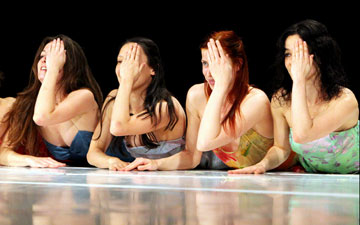
I have had some of the best dreams ever while wide awake and watching Tanztheater Wuppertal Pina Bausch. The company conjures imagery that no conscious mind seems capable of assembling.
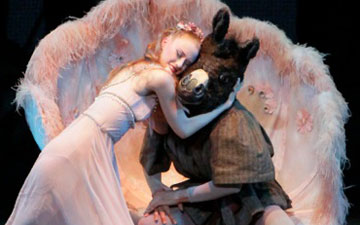
In the second act, storytelling gives way to pure dance, the highpoint of which is one of the most delicate, poetic pas de deux ever made - an allegory of love, danced by an unidentified couple. It is a Balanchinean vision of absolute trust and partnership...
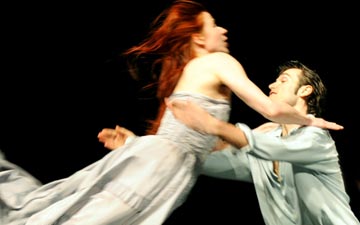
With every Bausch work some of the images and sketches stick in the mind and linger as the particular flavour of the piece, and these will vary for every audience member. For me, it was how tough it is being a woman in Nur Du.

...the 30-strong company, which has one of the widest ranges in dancer age I've seen, is sensational to watch... For these cameos, and others, I'm glad I caught up with Viktor, but once is enough for a good while.
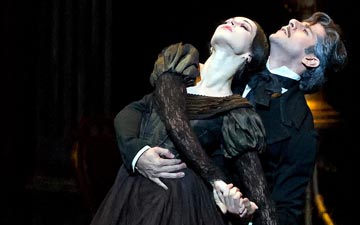
And yet, even on its own terms, it leaves one wanting, despite the performances of two excellent casts... And it does not blossom with repeated viewing. Much to the contrary. What are its short-comings? First, the music...
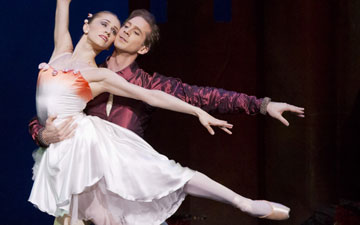
Barry Wordsworth conducted the trimmed and re-ordered score as though it were great ballet music. If only.