
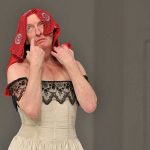
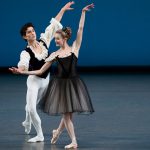
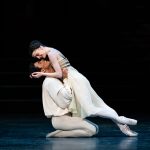
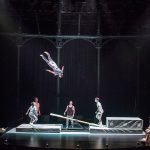


What most struck me on this particular evening was the transparency, and clarity of intention, that marked each work.
Tag - David H. Koch Theater

Amid all the fuss about the costumes, the choreogaphy paled... What a joy, then, to see a section of Western Symphony, with those marvelous frou-frou tutus by Karinska and that euphoric outpouring of Balanchine’s’ crisp, witty steps.
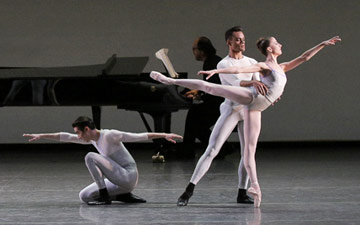
Creases revealed, once again, Just Peck’s ability to create strikingly imaginative patterns and formations onstage.
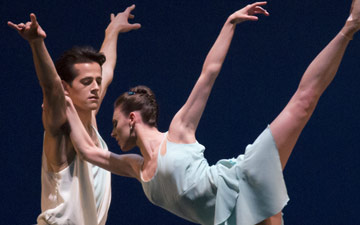
But 'A Place for Us' (new Wheeldon) feels like a bauble, not quite a jewel.
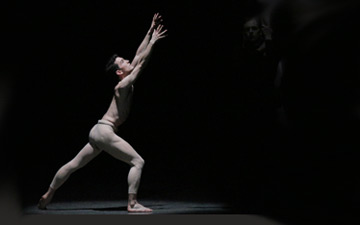
But stuck in the middle of all this brightness was Ivesiana, like a ghost at a birthday party. It is a most unsettling ballet.

Beloved Renegade - I’d venture to say that this is one of Taylor’s great works, heartfelt, profound, complex and deeply musical.
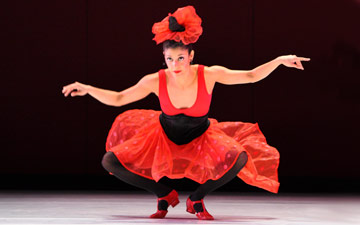
Opening night was a gala performance; one might have expected Esplanade, or Arden Court, but that’s just not Taylor’s style. For a choreographer who has been criticized for being too popular in his tastes, Taylor can be very odd indeed.
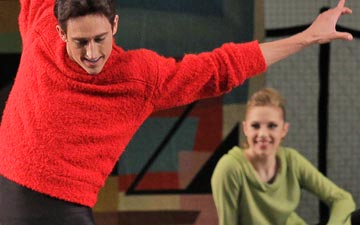
N.Y. Export: Opus Jazz is certainly not Robbins’ finest or most original work but perhaps because of its relative straightforwardness, it reveals much about what is so remarkable about this choreographer.

It’s a good thing indeed when a visit to the ballet turns out to be a night full of surprises, all of them good.

Is there a ballet more deceptive than Balanchine’s Divertimento from ‘Le Baiser de la Fée’? If so, I’m not aware of it.
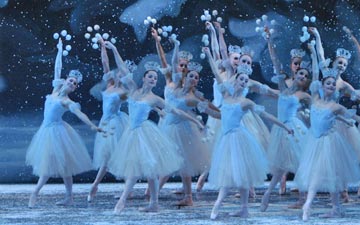
When something is beautifully made it never gets old. So it is with Balanchine’s Nutcracker, first performed by New York City Ballet in 1954 and honed to near-perfection over the years.
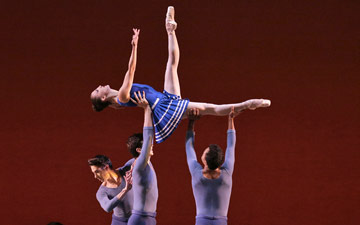
There should be more nights like this at New York City Ballet.
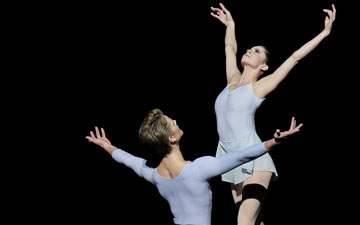
I’ve noticed two troubling trends this season at New York City Ballet. Perhaps they are connected. The first is the creeping tendency toward stolid tempi from the pit...
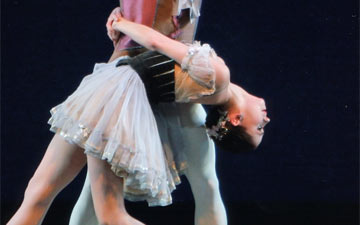
The highlight of the program was the seldom-performed Divertimento from “Le Baiser de la Fée”. It is a deceptively shadowy work, a fairy tale in the guise of a conventional divertissement.
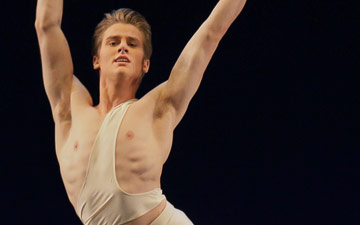
What is there to say about Orpheus, except that it seems to slip deeper into the recesses of time? I’ve read that at the première, the critic and poet Edwin Denby was so moved by it that he sat dumbfounded during intermission, unable to stand. It is difficult to imagine such a reaction today.
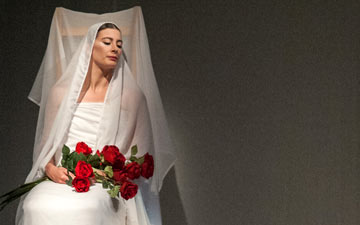
Bausch is a mystery. To some, she represents the summit of poetry and expression, worthy of a cult-like following. Clearly, these dancers derive great emotional sustenance from performing her work. And it suits them. But, with the exception of Gillot’s solo and a few moments here and there, it left me cold.
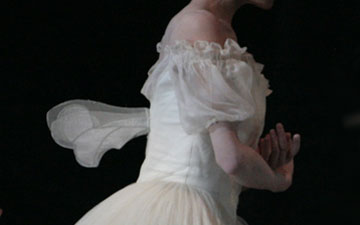
The arrival of the wilis takes one’s breath away. Not only are they individually beautiful, with their soft port-de-bras and milky-white shoulders, but they are all eerily the same, in every way: same size, same build, same arms, same tilt of the head, same gaze, same feet.
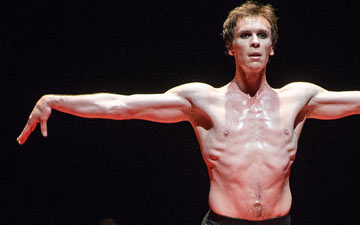
Nicolas Le Riche was fabulously predatory in Bolero, a raging furnace of self-love and sex appeal. One imagines that after the show he must have ravaged a hundred virgins, but maybe he simply went home and soaked his feet in the tub, but in any case, he was magnificent, good taste (and choreography) be damned.
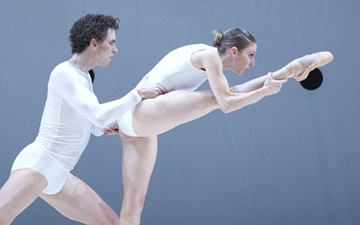
How can a company make good impression with just a few performances of one or two programs? The pieces have to be representative, interesting, and show the company in a the best possible light. It’s not easy, as the recent Lincoln Center performances of Australian Ballet have shown.
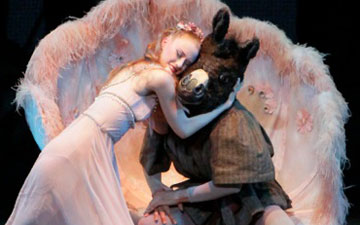
In the second act, storytelling gives way to pure dance, the highpoint of which is one of the most delicate, poetic pas de deux ever made - an allegory of love, danced by an unidentified couple. It is a Balanchinean vision of absolute trust and partnership...