



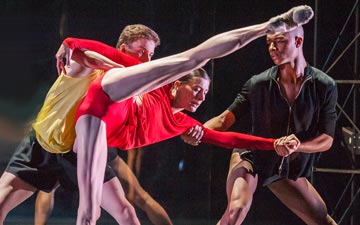
With her startling presence, Gillot manages to supply Tree of Codes with the sense of purpose it otherwise lacks.
Author - Marina Harss


Julio Bocca, much loved but now no longer dancing, has a new life in Montevideo, running Ballet Nacional SODRE. Marina Harss talks to a busy man rebuilding his company - fast...

Collaboration can be a wondrous thing, but it’s no guarantee.

As on the previous evening, various schools of Indian dance were on view, revealing fascinating echoes and differences between them.

Next year I want to dedicate more time to teaching, and finally bring out my clothing line, under the brand Paloma Herrera...

But the highlight of the evening—in part because of its novelty— were the two dances performed by Rakesh Sai Babu, the young male dancer specializing in the much less familiar Chhau dance style...

Q: What have you learned about Petipa from the notations? Ans: Looking at the notations changed my taste. Honestly, I just can’t stand seeing productions of the classics any more, because I know how far it is from Petipa’s intentions...
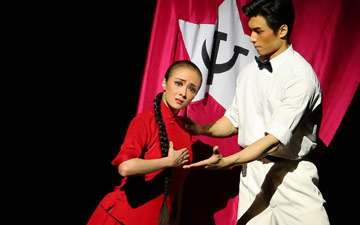
The National Ballet of China dancers are beautifully trained, surprisingly tall, willowy – even the men – and delicately featured.
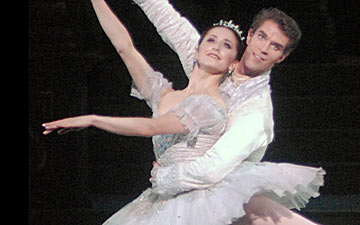
Two 2 casts reeviewed - led out by Stella Abrera and a guesting Marianela Nunez. But the star of Cinderella is the ballet itself – Ashton’s tribute to Petipa, to silliness, and to the power of childlike wonder...

These are dancers worth following in a wide repertory of works; it’s a shame to see them go while feeling we’ve barely gotten to know them better.

After an absence of eleven years, the Royal Ballet has finally returned to New York; they’re currently presenting two programs at the Koch Theatre,..

Copeland has earned her place center-stage, and it seems more likely than ever that she will be promoted to principal.

Battle (in No Longer Silent) responds with a brilliant visualization of the music’s intricate parts, a kind of neo-Rite of Spring for our time.
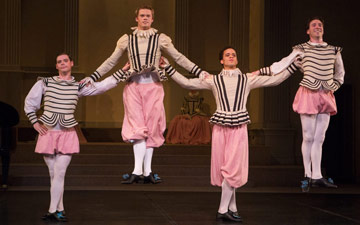
The program presented at St. Mark’s this past week reflects all of these positive developments; even more, it seemed infused with a new sense of assurance and identity.
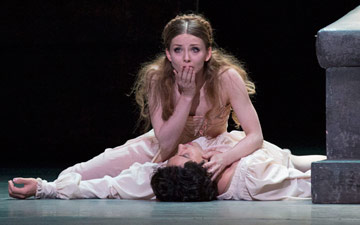
One could imagine a fine partnership developing between Cornejo and Obraztsova. Both are generous and open-hearted performers.
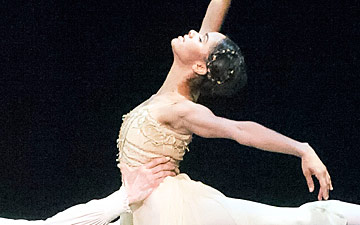
The million-dollar question for any dancer on the cusp is this: can they carry an evening-length story ballet? The answer, on the evidence of Copeland’s début in Romeo and Juliet, is yes.

Some of the great 19 century Russian ballet classics were recorded in Stepanov notation - Doug Fullington is one of the few people in the world who can understand Stepanov's hieroglyphics and what they represent for those looking to do justice to the past...

Harris’s Exodus, on the other hand, felt just right. Like so many pieces in the Ailey repertory, it suggests a spiritual quest, a journey toward the light...
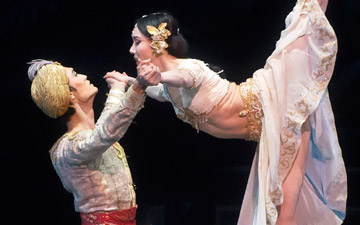
But no end of fine, or even inspired, performances can breathe life into this tired production
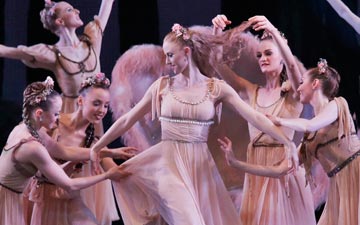
George Balanchine’s Midsummer Night’s Dream is really two ballets, layered one upon the other.